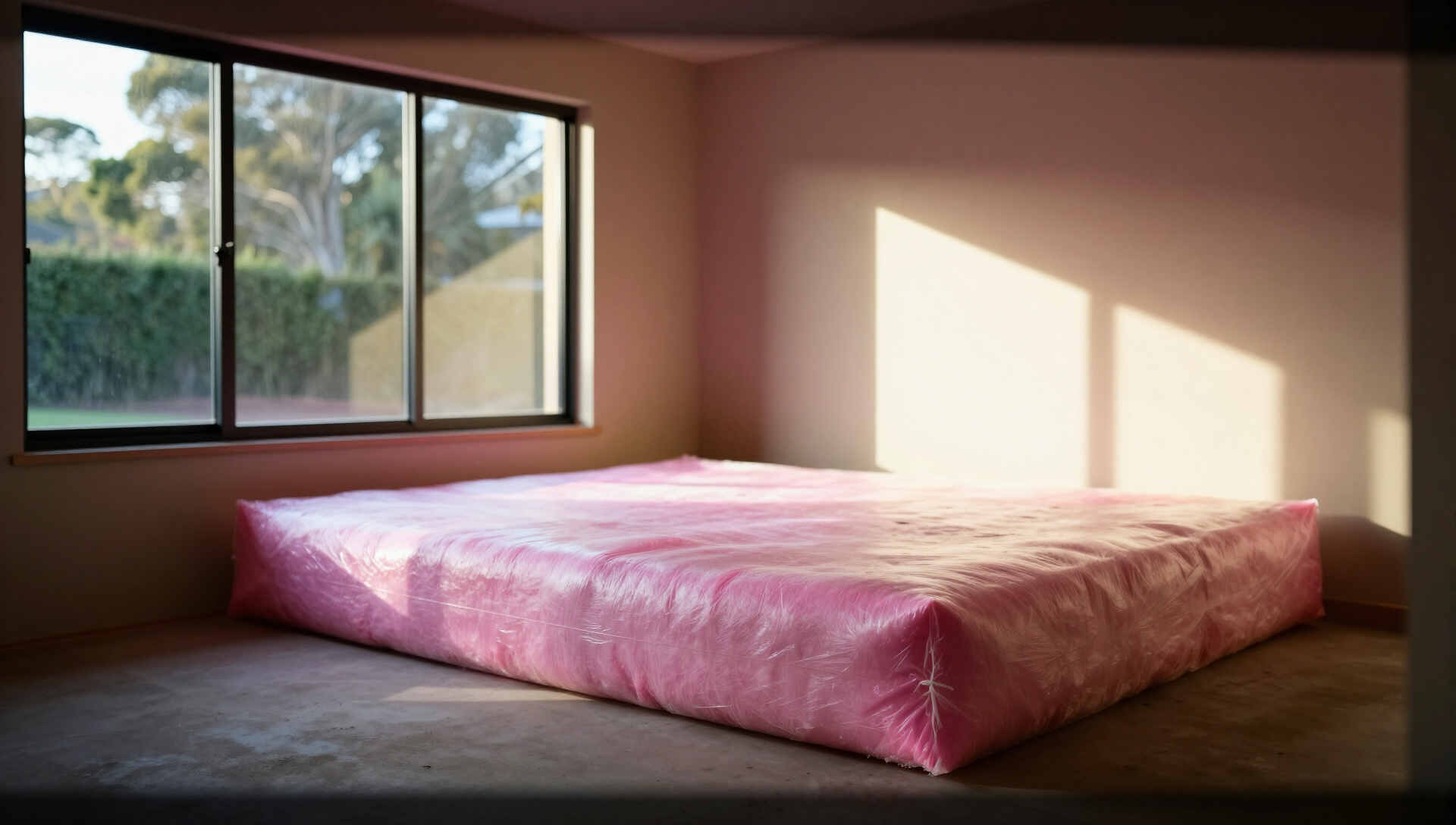
Bulk insulation in Ivanhoe addresses the main cause of energy waste in older homes: uncontrolled heat flow through ceilings, walls and floors. In Melbourne’s climate, up to 35 percent of winter heat loss escapes through an uninsulated ceiling, while cold floors account for another 10 to 20 percent of discomfort. Glasswool, polyester and rockwool batts are the most common bulk products used to slow this transfer by trapping still air within their fibres.
For Ivanhoe’s weatherboard and brick veneer homes, ceiling insulation is the first priority because the roof space is usually accessible via a manhole. Batts are laid between ceiling joists, with care taken to maintain clearances around downlights and flues. Wall insulation is typically added during renovations when the lining is removed, or by cutting small holes in plasterboard for each stud space. Underfloor insulation requires sufficient crawl space to fit batts between floor joists from below.
The R-value you choose depends on your budget, the area being insulated and your heating and cooling habits. Ceilings benefit most from R4.0 to R6.0, walls from R2.0 to R2.7 and underfloors from R1.5 to R2.5. Higher R-values cost more upfront but deliver greater long-term savings. Cost is also affected by roof pitch, access difficulty, the need to remove old insulation and the total floor area to be covered.